

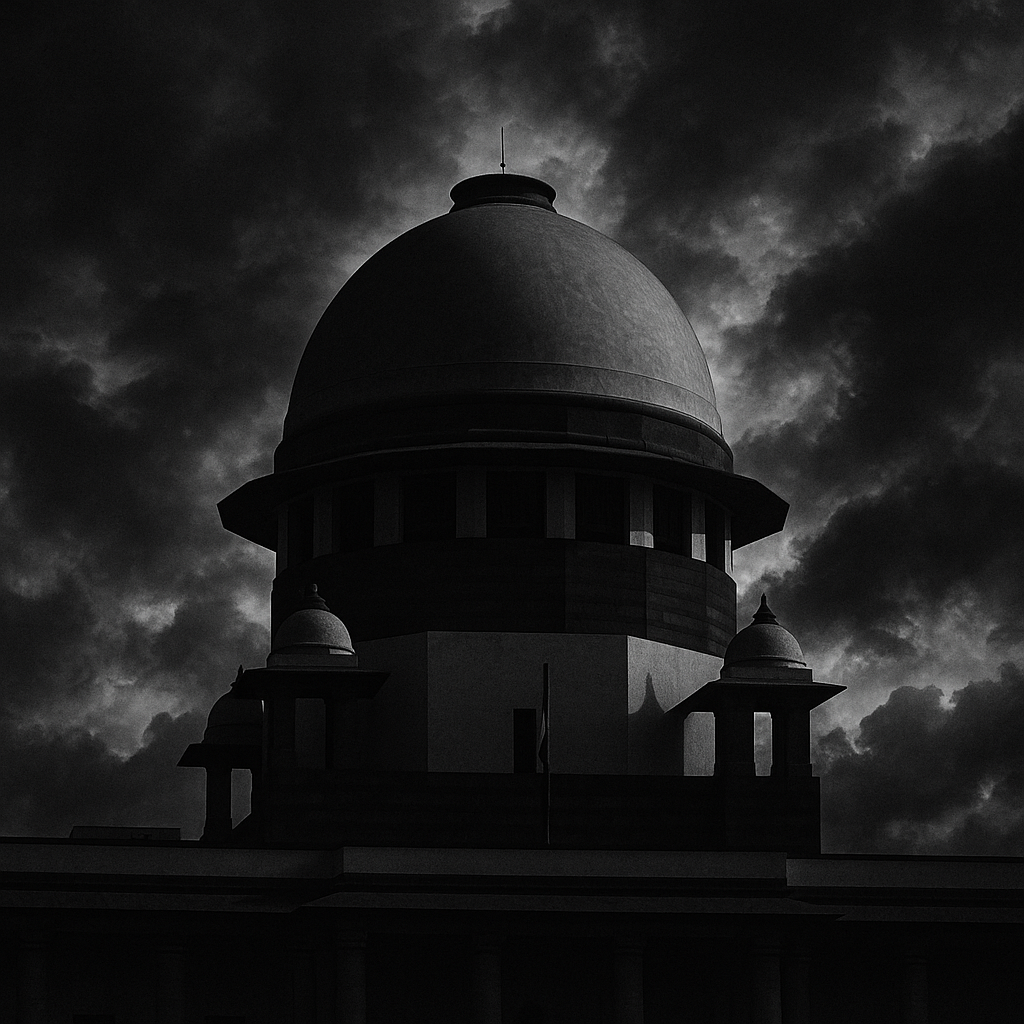
In a landmark judgment, the Supreme Court of India has established guidelines for the judicial review of legislative punishment, marking a significant development in the ongoing dialogue about the separation of powers within the Indian constitutional framework. The case in question, Sunil Kumar Singh v. Bihar Legislative Council, was presided over by Justices Surya Kant and N.K. Singh, and builds upon the precedent set by the 2007 cash-for-query case, Raja Ram Pal v. Speaker, Lok Sabha.
The Supreme Court’s decision addresses the contentious issue of whether legislative actions, specifically those involving punitive measures, are subject to judicial scrutiny and under what standards such scrutiny should be applied. The judgment clarifies the extent to which the judiciary can intervene in the internal proceedings of legislative bodies, a topic that has been a point of legal contention for many years.
Historically, the Indian judiciary has maintained a cautious approach towards interfering in legislative matters, respecting the autonomy of legislative bodies as enshrined in the Constitution. However, the judiciary has also recognized its role in ensuring that legislative actions do not violate fundamental rights or exceed constitutional boundaries. The Sunil Kumar Singh judgment further cements this balance by providing a framework within which judicial review can be exercised without overstepping the separation of powers.
The court reiterated the principles laid out in the Raja Ram Pal case, emphasizing that while legislative bodies have the authority to manage their own affairs, including disciplining their members, this power is not absolute. Judicial review can be invoked in instances where legislative actions are alleged to contravene constitutional provisions or fundamental rights. The judgment provides a structured approach for courts to assess such claims, ensuring that legislative actions remain within constitutional limits.
Justice Surya Kant, delivering the judgment, highlighted the necessity of maintaining the delicate balance between legislative privilege and judicial oversight. He noted that the judiciary must exercise restraint and respect the autonomy of legislative bodies, intervening only when there is a clear violation of constitutional principles. The guidelines outlined in the judgment are designed to assist courts in determining when such intervention is warranted, thereby safeguarding both legislative independence and constitutional supremacy.
This decision is expected to have a profound impact on future cases involving legislative punishment, providing a clear legal standard for both legislative bodies and the judiciary. It underscores the judiciary’s role as a guardian of the Constitution, tasked with ensuring that all branches of government operate within their designated spheres of authority.
The judgment has been widely regarded as a pivotal step in clarifying the scope of judicial review over legislative actions. Legal experts have praised the court for reinforcing the principles of constitutional governance and for providing a clear framework that respects the autonomy of legislative bodies while upholding the rule of law.
As India continues to navigate the complexities of its constitutional framework, the Sunil Kumar Singh judgment serves as a reminder of the critical role that judicial review plays in maintaining the balance of power between the different branches of government. It reaffirms the judiciary’s commitment to upholding the Constitution and protecting the rights of citizens against potential overreach by legislative authorities.